Search for "best swim nappies UK" and you will find a lot of ranked lists, many written by the people selling them. We don't do that. We don't sell, test or rank swim nappies, and we are not paid by any brand. This guide explains what swim nappies are for, the types you will meet, how to judge a good fit, and the pool rules to expect, so you can choose the right ones for your own baby.
Why babies need swim nappies
NCT says babies and toddlers need to wear a swim nappy in the swimming pool unless they are fully potty trained. The reasons come down to two points:
- A normal nappy is not made for water. NCT explains that it becomes heavy with water and may split open, and could pose a drowning risk to a young baby.
- A swim nappy doesn't absorb water. That is the point of it. It is there to catch poo, not to soak up wee, so it won't hold wee the way a normal nappy does.
NCT also advises putting the swim nappy on just before swimming for this reason.
The three things you will see
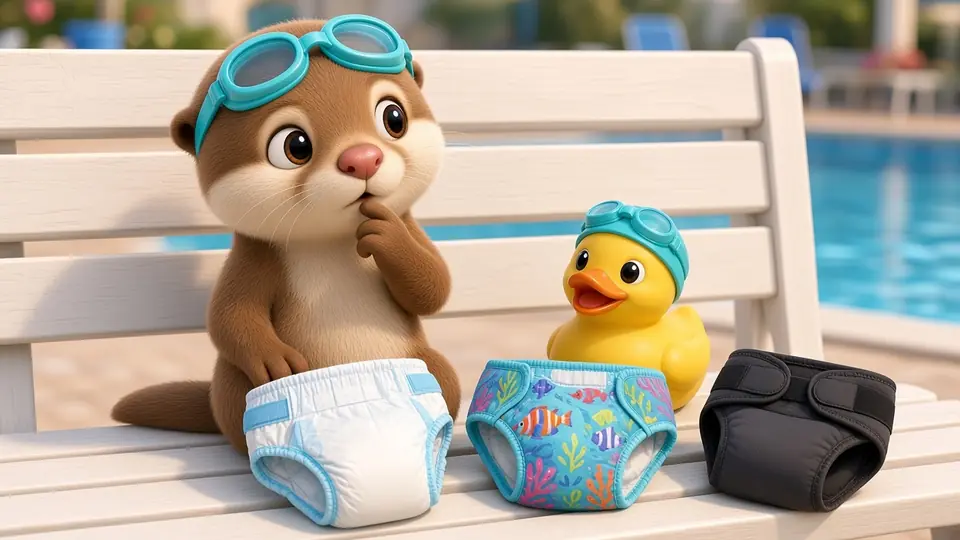
Disposable swim nappies
These are single-use, pull-up style nappies designed for water. They are convenient: you put one on, and when you finish you bin it. NCT says that if there is no nappy bin at the pool, take disposable swim nappies home to put in the bin.
Reusable swim nappies
These are washable nappies, usually with snug elastic at the waist and legs. You rinse and wash them after each swim. Swim England's checklist lists "a disposable or reusable swim nappy" as equally acceptable for the inner layer.
Neoprene nappy covers
This is a snug cover that goes over the swim nappy. NCT says it forms a seal around the tummy and thighs and gives extra insurance that the contents of the nappy stay inside. Swim England's baby swimming checklist, from a code of practice supported by Swim England, Water Babies and Splash About, asks that all children under four wear a double-nappy system for their class. That means a disposable or reusable swim nappy with a snug-fitting neoprene nappy on top, with close-fitting leg and waist ribs.
The "double nappy" is the bit that surprises many first-time parents. If your class requires it, you will usually need to buy or borrow a neoprene cover as well as your swim nappy. NCT says some pools and swim classes require one, so ask when you book.

How to judge a good fit (the part that matters most)
Whichever type you choose, fit matters more than the label. These points follow Swim England's description of a good double-nappy system:
- Snug at the waist and legs. The neoprene cover should be close-fitting, with ribbing at the leg and waist openings, so that nothing can escape.
- Not too tight. Check that nothing is digging in or leaving deep marks on your baby's skin. If it is, move up a size.
- Right size, not just right age. Each brand sets its own sizes, so check the range printed on the pack rather than guessing from age.
- Spare ones. Pack a spare of each layer. Babies grow quickly, and an accident means a change.
If your baby is between sizes, or you are not sure about the fit, ask your swim teacher to check it before the lesson.
Disposable or reusable? How to decide for yourself
There is no official "best". These are practical questions to weigh up:
| Question | Disposable | Reusable |
|---|---|---|
| What happens after the swim? | Bin it (or take it home if there's no bin) | Rinse, wash and dry before next time |
| How do costs work? | Pay per pack, ongoing | Higher cost for the first purchase, then re-used |
| Fit | Check the size range on the pack | Check the size range and adjustability on the pack |
| Good if you... | Swim occasionally, or want less to carry home | Swim every week, or want less waste |
The costs in this table are comparisons of how you pay, not prices. We haven't compared brand prices and wouldn't want you to trust a price we couldn't verify.
What to do if there is an accident
Accidents can happen, which is why the nappy system exists. NCT advises:
- Tell pool staff straight away if poo escapes the nappy and gets into the water. The pool will need to be closed for cleaning. NCT says this applies if the baby vomits in the pool too.
- Check the nappy regularly and change it if it has poo in it.
- Don't take a baby swimming if they have diarrhoea. It will leak out of the nappy and contaminate the pool, and they won't enjoy it if they aren't well.
How long should you wait after a tummy bug? The NHS says not to use a swimming pool until at least 48 hours after diarrhoea and vomiting symptoms stop. If it turns out to be cryptosporidium, UKHSA advice is not to go swimming or take your child swimming while suffering from diarrhoea and for two weeks after the diarrhoea has stopped. Ask your GP if you are unsure.
What about toddlers who are potty training?
NCT says that if a child is fully potty trained, take them to the potty or toilet before they go in the pool, and again every 30 to 60 minutes during the session. Until your child is fully potty trained, they still need the nappy system.
Rules vary, so check before you buy
Pool and class rules are set by the provider, not by a national body, and they differ. Before you buy anything:
- Read your class confirmation email. It often says which nappies are required.
- Ask the teacher. If you aren't sure, ask them at the first lesson.
- Try a trial lesson or one public session first, to see what other parents use. Our town pages list classes and public sessions by area.
What we can't tell you
We can't say which brand is best, because we haven't tested them, and we won't repeat claims from retailers or manufacturers that we can't check. What we can say, from NCT and Swim England, is what the system should do: contain waste, fit snugly and be changed promptly if there is an accident.
Ready to find a class near you?
Compare baby and toddler classes in 74 UK towns by age, day, time and price, with a link to each provider's own booking page.
Frequently asked questions
Do I need a neoprene nappy as well as a swim nappy?
Swim England's baby swimming checklist asks for a double-nappy system for under-fours in a swim class: a swim nappy with a snug neoprene nappy on top. NCT says some pools and classes require it. Check with your provider.
Can I use a normal nappy for swimming?
No. NCT says normal nappies become heavy with water and may split open, and could pose a drowning risk to young babies.
Are reusable swim nappies as good as disposable ones?
Swim England's checklist treats a disposable or reusable swim nappy as acceptable for the inner layer. The important part is a snug fit and, where needed, a neoprene cover.
What if my baby has a poo in the pool?
Tell staff immediately. NCT says the pool will need to be closed for cleaning.
When can my baby swim again after a tummy bug?
The NHS says wait until at least 48 hours after diarrhoea and vomiting symptoms stop. If your doctor thinks it was cryptosporidium, UKHSA advice is to wait two weeks after the diarrhoea stops.
Sources
- NCT: Taking your baby or toddler swimming
- Swim England: Baby swimming checklist for parents and carers
- NHS: Diarrhoea and vomiting
- UKHSA, GOV.UK: Cryptosporidium, public advice
This article is general information, not medical advice. Ask your midwife, health visitor or GP about your own baby. Prices and sessions quoted from our own data were collected on the date shown on each town page.